Why Armagh Is Known as the Home of St Patrick
Some places feel deeply connected to their past, and Armagh is one of them. Its history is part of everyday life, from the hills that shape the city to the stories people still tell. Armagh is known as the Home of St Patrick because the most significant moments of his mission unfolded here, and the city grew into the spiritual heart of Ireland as a result.
Long before Patrick ever walked through Armagh as a free man, this landscape already held immense cultural and spiritual meaning. Just outside the city sits Emain Macha, or Navan Fort, once the seat of Ulster’s kings and one of the most important ceremonial places in Ireland. By the time Patrick returned in the 5th century, its great druidic temple had fallen silent, but the site still carried a strong sense of sacred importance. Anyone hoping to introduce a new faith would have understood the value of linking it to a place like this, and Patrick certainly did.
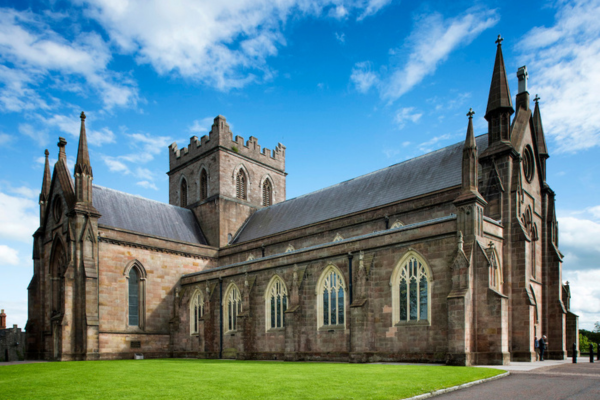
When Patrick arrived in the area, he entered into negotiations with Daire, the local chieftain. At first, he was offered land lower down the hill near where Scotch Street sits today, but in time he was granted the higher ground he truly wanted. That hill was Ard Macha, the Height of Macha, which later gave the city its name. In 445, Patrick established a stone church on that site. He chose a place that already carried meaning for the people who lived there, and that choice set Armagh on its path to becoming the centre of Christianity in Ireland. Today, St Patrick’s Church of Ireland Cathedral stands on that very spot.
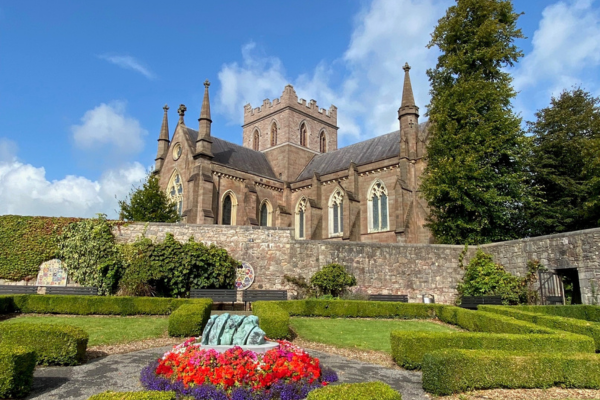
Armagh is known as the Home of St Patrick because the most significant moments of his mission unfolded here, and the city grew into the spiritual heart of Ireland as a result.
Armagh continued to grow in spiritual influence, even through difficult times. Viking raids and periods of occupation shaped its early story, but the city’s importance never faded. In 1004, the High King of Ireland, Brian Boru, travelled to Armagh to honour the church Patrick established and to affirm its status as the principal church in Ireland. Ten years later, after the Battle of Clontarf, his body was brought back to Armagh and laid to rest in the church founded on Ard Macha. Together, these acts of recognition helped establish Armagh as the ecclesiastical capital of Ireland, a place long regarded as the centre of faith on the island. They also linked the city not only to St Patrick but to the wider story of Ireland itself.
Over the centuries, Armagh continued to evolve. During the 13th century, Archbishop Mael Padriagh Ua Scannail expanded the cathedral and created the large crypt that visitors can still walk through today. In the 18th century, Archbishop Robinson restored the building once again and reshaped much of the surrounding city. Through all these changes, Armagh kept its identity. It remained the spiritual centre of Ireland, just as Patrick had intended.
Across the valley, on a sister hill, stands a second cathedral, also named for St Patrick. Its story begins with a simple tale. Patrick was walking through the landscape when he startled a doe and her fawn. He carried the fawn to safety on the nearby hill, and he is said to have remarked that a great church would one day stand there. More than a thousand years later, as Catholic emancipation reshaped life in Ireland, Archbishop William Crolly chose that very hill for a new cathedral. Work on St Patrick’s Roman Catholic Cathedral began in 1840, paused during the Great Famine, and was finally complete in 1873. Its twin spires now rise above the city as one of Armagh’s most recognisable landmarks.
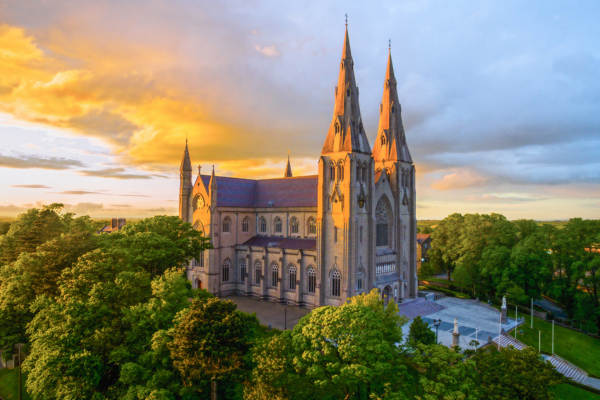
This gives Armagh a distinction found nowhere else in the world. It is the only city with two cathedrals dedicated to the same saint – St Patrick.
This gives Armagh a distinction found nowhere else in the world. It is the only city with two cathedrals dedicated to the same saint – St Patrick. Each one stands on its own hill with its own story, and each reflects a different part of Ireland’s Christian tradition. Together, they form one of the strongest symbols of Armagh’s identity.
That connection comes to life every March during the Home of St Patrick Festival. As evening falls, both cathedrals are illuminated in green light and the city gathers for the Vigil Walk. This quiet procession moves from the Church of Ireland cathedral to the Roman Catholic cathedral. Led by the Archbishops of Armagh, it brings people together in a way that feels simple, reflective and timeless.
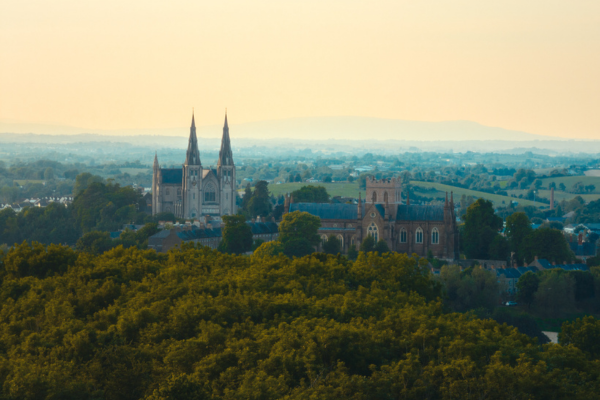
Visitors come here for many reasons: to see the ancient crypt, explore the sacred landscape of Emain Macha (Navan Fort) or experience the architectural beauty of both cathedrals. Yet many leave with something harder to describe. There is a sense that Patrick’s presence is still part of this place. His story is not confined to the past but lives on in the culture, the festivals, and the way people talk about the city.
This is why Armagh is known as the Home of St Patrick. His influence settled here early and became part of the city’s character, shaping its story in ways that are still felt. Armagh continues to carry his legacy, and anyone who spends time here can sense his connection to the city.
Key St Patrick Sites to Visit in Armagh
Located on Ard Macha, this stands on the very spot where St Patrick founded his stone church in 445 AD, establishing Armagh as the spiritual centre of Christianity in Ireland. Visitors can explore its historic crypt, medieval architecture, and the hill that gave Armagh its name.
Standing on another hill across the valley, this cathedral reflects the later Catholic tradition in Armagh. According to tradition, St Patrick once crossed this hill and foretold that a great church would one day stand there. Built between 1840–1873, its twin spires are among the city’s most recognisable landmarks.
A major ceremonial site with deep spiritual meaning, this was the ancient seat of Ulster’s kings. Today, it’s both an archaeological monument and the starting point of St Patrick’s Way, the modern pilgrimage trail linking sites connected to St Patrick’s life and mission.