Susan Connolly
GROUND (100+one)
21 September – 2 November 2024
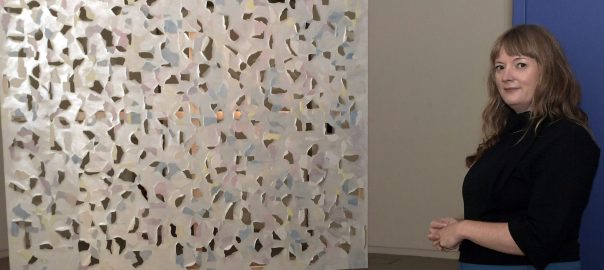
The F.E. McWilliam Gallery and Armagh City, Banbridge and Craigavon Borough Council are delighted to present Susan Connolly’s exhibition GROUND (100+one). A new body of work that responds to the specific context of the Gallery, GROUND (100+one) is shaped by Connolly’s ongoing preoccupation with the materiality of painting and informed by her research into Mainie Jellett’s Decoration (1923), the first modern abstract painting exhibited in Ireland.
Connolly creates art works that slide between categories and genres. She pushes painting to its limits through processes that include layering, scoring, cutting and peeling paint from its support. The title GROUND refers to this common denominator shared by every painting – a surface, on which to apply the pigment. (100+one) references the number of years since Jellett’s Decoration was first exhibited in Ireland and also the one hundred paintings and collages that Connolly set herself the task of producing for this exhibition.
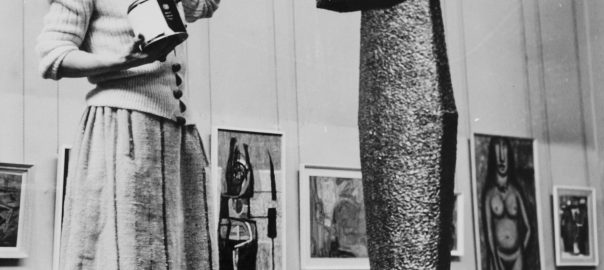
Jellett’s approach to painting was shaped by the time that she and Evie Hone, spent in Paris studying and collaborating with the Cubist Albert Gleizes. Together, they established a set of theoretical principles to create an organic, “living,” non-materialistic art. Jellett’s Decoration was based on these principles. However, when it was exhibited in Dublin in 1923, Decoration provoked hostility and confusion amongst Irish audiences. For a young woman recently returned to Dublin from Paris, Jellett’s decision not to turn heel was an act of courage and evidence of her determination to help shape modern Irish art.
Connolly’s interest in Jellett is both as a pioneer and an abstract painter who challenged preconceptions of painting. Her focus on Decoration also relates to the title which has negative associations in the art world, suggesting something superficial or frivolous. Through her homage to Jellett, Connolly aims to reclaim the term and propose a form of abstract art that is more akin to the repetitive processes of sewing, weaving and other craft-based art forms that are usually associated with women’s work.
Jellett’s commitment to the theoretical principles of abstract cubism is similar to Connolly’s methodical technical approaches to her work. While Jellett was seeking to create a modernist abstract Irish art, Connolly’s aims are focused on expanding our perceptions of what painting is and challenging viewers to look and think beyond the painted surface.